TSMC has made an application for a new fab and campus near College Station, Brazos County, Texas. The proposed fab would be just one county over from Terafab, would likely share supply chains, and would be positioned to make 2nm-class chips by 2031, with the $22.6 billion plan detailing how the Taiwanese chipmaker is planning to expand its U.S. operations. An application under Texas’s Jobs, Energy, Technology and Innovation (JETI) program for a school property-tax limit shows TSMC is weighing a new fab site. The fab wouldn’t make 2nm or more advanced chips until 2031, six years after 2nm volume production began in Taiwan. It would come with a school-tax break valued at around $354 million.This would be the company’s “second campus” for advanced chipmaking in the U.S. and the first outside Arizona. The Comptroller has recommended the tax application for approval, which the school district and the governor still have to grant. The application comes from TSMC Arizona Corporation, which is TSMC’s subsidiary located in Phoenix. Construction is projected to start in 2027, but the plan remains under evaluation, and nothing in the filing commits TSMC to buy the land or to build on it.(Image credit: Tom's Hardware)TSMC is looking to build out more in the U.S. because most of its large customers are based there and the government has been “very helpful” in pursuing additional fab capacity, Chairman and CEO C.C. Wei said in October. Texas is one option for expanding beyond Arizona, though the filing doesn’t say what drew TSMC there. TSMC judges each site on its tax environment, workforce availability, utility capacity and cost, and site and infrastructure readiness, as well as its “long-term scalability and expansion potential.” TSMC says Arizona offers “established operational efficiencies and lower capital risk,” and that the tax incentive would aid this further.TSMC has “nearly 20 fabs worldwide in progress,” Wei said on the October earnings call, including 13 leading-edge and advanced packaging fabs in Taiwan and “another five to six fabs overseas.” Annual capacity for its 2nm (N2) family is expected to more than double in 2027. TSMC also expects more of its fabs to be ramping up in the U.S.Texas wouldn’t begin commercial operations until 2031, and the economic model filed with the plan doesn’t have it at full operations until 2032. By contrast, the second fab in Arizona is expected to begin volume production in Q3 2027, but at 3nm. In Taiwan, N2 has been in high-volume production since Q4 2025. TSMC expects A14, its next full node after N2, to enter risk production in 2027 and volume in 2028. By 2031, A14 is set to have been in volume production for about three years, so a Texas fab that starts on 2nm would be at least a generation behind TSMC’s leading edge. Taiwan has also debated limits on how advanced TSMC’s overseas fabs can be.TSMC’s roadmap and the Texas timelineMilestoneWhereWhen2nm (N2) volume productionTaiwanQ4 2025A16 (a 2nm-family node) volume productionTSMC, site not stated2027 (expected)3nm volume production, second fabArizonaQ3 2027A14 volume productionTSMC, site not stated2028High-NA EUV adoptionTSMC, site not stated2030 (planned)2nm “and/or more advanced,” commercial operationsTexas (proposed)2031The new site would have one or more fabs but, as it stands, Brazos County’s announcement describes one. For scale, we’ve estimated that a single 2nm-class module with about 20,000 wafer starts a month costs $25 billion to $35 billion, so this plan’s $22.6 billion budget falls below the low end of that range.The price tag is split in multiple ways, with $8.60 billion for buildings and other real property, while 62% of the total, or $14.02 billion, is for tooling, machinery and equipment, a category that on the filing’s list also covers power, HVAC, cleanroom, water and gas systems. The building's spending would come first, in 2027, 2028, and 2029 alone. Tool spending would begin in that last year and peak at $9.05 billion in 2030, with about 65% of the tool budget landing in that year, before ending at $963.9 million in 2032 — the form’s Schedule A stops at 2031 and $21.66 billion total.TSMC’s proposed Texas project: spending and hiring by yearYearBuildingsMachinery and equipmentNew hires2027$729.0 million—02028$2.59 billion—7572029$5.28 billion$649.2 million1,1102030—$9.05 billion2322031—$3.36 billion02032—$963.9 million0Total$8.60 billion$14.02 billion2,099The tool spending schedule lines up with a change in how TSMC prints its chips. Lithography, the step in the chipmaking process that uses light to project circuit patterns onto the wafer, requires advanced machines. The most advanced do it with extreme ultraviolet (EUV) light. High-NA EUV tools have a higher numerical aperture, gathering more light to print finer features in one pass. Wei said TSMC intends to use High-NA in 2030, which matches the 2030 peak in Texas tool spending, but that is a company-wide plan, and nothing in the Texas plan gives a delivery schedule or names High-NA tools specifically.What the plan does spell out is its list of eligible property: fab and central utility plant buildings, cleanroom systems, ultra-pure water and wastewater treatment with water-reclaim systems, bulk and specialty gas as well as automated material handling, and gas-insulated switchgear.Also named is mask or reticle shop equipment as well as lithography, etch, deposition, implant, chemical mechanical planarization (CMP), diffusion, and clean/wet tools, by type, although the list names no tool vendors, EUV counts, or wafer capacity. The mask shop is highlighted as “co-located within the fab and integral to the manufacturing process.” Masks are patterned plates used by a lithography tool to project their patterns onto each wafer, one per chip layer, and every new design needs its own set. Making them on site suggests the fab is meant to stand on its own. Wei also said TSMC is working with ASML on a 12-inch photomask by 2031, which is the year the Texas site would open.The plan’s location is in Brazos County, Texas, sited across 86 parcels and almost 3,232 acres of land, which is about five square miles. This compares to TSMC’s Phoenix campus at about 1,078 acres on the county tax roll, with about 902 more purchased in January; this leaves the Texas site at about 1.6 times that total. TSMC would build and manage the site, which sets it apart from Terafab, a fab a TSMC customer is planning one county over: Wei has confirmed talks about using its capacity but said any such fab would have to be run by TSMC.(Image credit: Tom's Hardware)Residents in development areas for fabs and data centers tend to raise two concerns, and both are related to utility usage. The first is power: a local report says Bryan Texas Utilities provides that for the proposed area, but it’s unclear who would serve the fab. For scale, a utility filing in Arizona reportedly puts TSMC’s built-out Phoenix campus at about 1.9 gigawatts, a figure for the whole campus, not a single fab.The second is water: Wellborn Special Utility District reportedly provides service, while the developer is said to intend to buy its water from a third party instead. As a comparison, a state document on an unnamed company’s $45 billion, two-fab project in Sherman, as reported by the Dallas Business Journal, lists 8 to 10 million gallons a day to start with a peak at 20 to 25 million after buildout, but this isn’t a 1:1. That project is targeting production in Q4 2029.Economic impacts are a significant part of the deal: the plan projects 2,099 direct jobs by 2030, while the agreement would require only 35, the legal minimum. Pay, on the other hand, comes with a projected average salary nearly double the wage level that would need clearing.Texas appears willing to work with TSMC on this, with a recommendation for approval signed by Deputy Comptroller Noah Betz this week. The gross tax benefit would build over 14 years, starting four years before the formal incentive period, and would cut the district’s maintenance and operations (M&O) levy on the project nearly in half. Even so, the full $354.1 million is only 1.6% of the $22.6 billion investment. In return, TSMC would have to post a performance bond equal to 10% of the benefit.The Comptroller believes the incentive is a compelling factor — TSMC would not invest in Texas without it — but the office says it has not audited or verified the company’s projections. TSMC, for its part, calls the limit “determinative.”The Texas tax deal in numbersMeasureFigureSourceDirect jobs TSMC projects2,099 by 2030ApplicationJobs the agreement would require35ComptrollerAverage salary TSMC projects$135,687 in 2028, rising 2% a yearApplicationMinimum average wage for the project’s jobs$73,603ComptrollerConstruction workers, 2027–20299,841 a year on average; 18,134 at the 2029 peakConsultant’s modelOut-of-town visitors708 a year; average stay 41 daysConsultant’s modelTax benefit, total$354.1 millionComptrollerTax benefit during construction, 2028–2031$123.6 millionComptrollerTax benefit in the incentive period, 2032–2041$230.6 millionComptrollerSchool M&O tax over 20 years, without the agreement$759.3 millionComptrollerSchool M&O tax over 20 years, with the agreement$405.2 millionComptrollerPerformance bond$35.4 millionComptrollerA potentially far larger incentive is federal: a tax credit worth 35 cents back to every qualifying dollar spent, as long as construction technically begins before the end of the year. “Qualified” means the cost of the fab’s depreciable physical property that is integral to running the fab, meaning the buildings and the tools, in the year each goes into service, and “construction” means actual physical work of a significant nature or paying or incurring at least 5% of the qualifying property’s cost, with work continuing afterward. Construction here is projected to start in 2027, after that cutoff, though off-site work under a binding written contract or early spending this year could still count, and an extension has been proposed in the Senate.The land doesn’t count in this equation, and neither does office space. This is also a credit off the tax bill, dollar for dollar, not a deduction. The rate was 25% under the 2022 CHIPS Act and rose to 35% for property placed in service after 2025. If the full $22.6 billion qualified, that would be about $7.9 billion back, but not every dollar qualifies.If Texas doesn’t work out, TSMC is also considering “a new land parcel in Arizona,” which would be closer to the existing North Phoenix site. TSMC says that may make many things easier, such as handling a workforce and the logistics, with the ability to use existing suppliers and relationships on known infrastructure. This is an incentive for the state of Texas to give the tax break.The tax agreement needs approval from both the College Station ISD board and the governor. The district also owns one of the parcels on TSMC’s list for the site: almost 91 acres, with a 24,496-square-foot building from 2024. The board has set a public hearing for Dec. 10, with public comment, and could approve the project’s reinvestment zone that day.The district has 30 days from the day it receives the application, which puts its deadline in late December. As for Brazos County, town halls could reportedly begin as early as the first week of December, though the county has promised only one, “in the near future.”Assuming things move forward, the real measure begins with the first phase on land. Even if production arrives a generation late, it would be a positive development for U.S.-based chipmaking.
TSMC’s $22.6 billion Texas plan wouldn’t make 2nm-or-better chips until 2031
TSMC’s Texas filing describes a $22.6 billion project in Brazos County for 2nm or more advanced chips, starting production in 2031.
Editor
Nov 26, 2026 · 11 min read
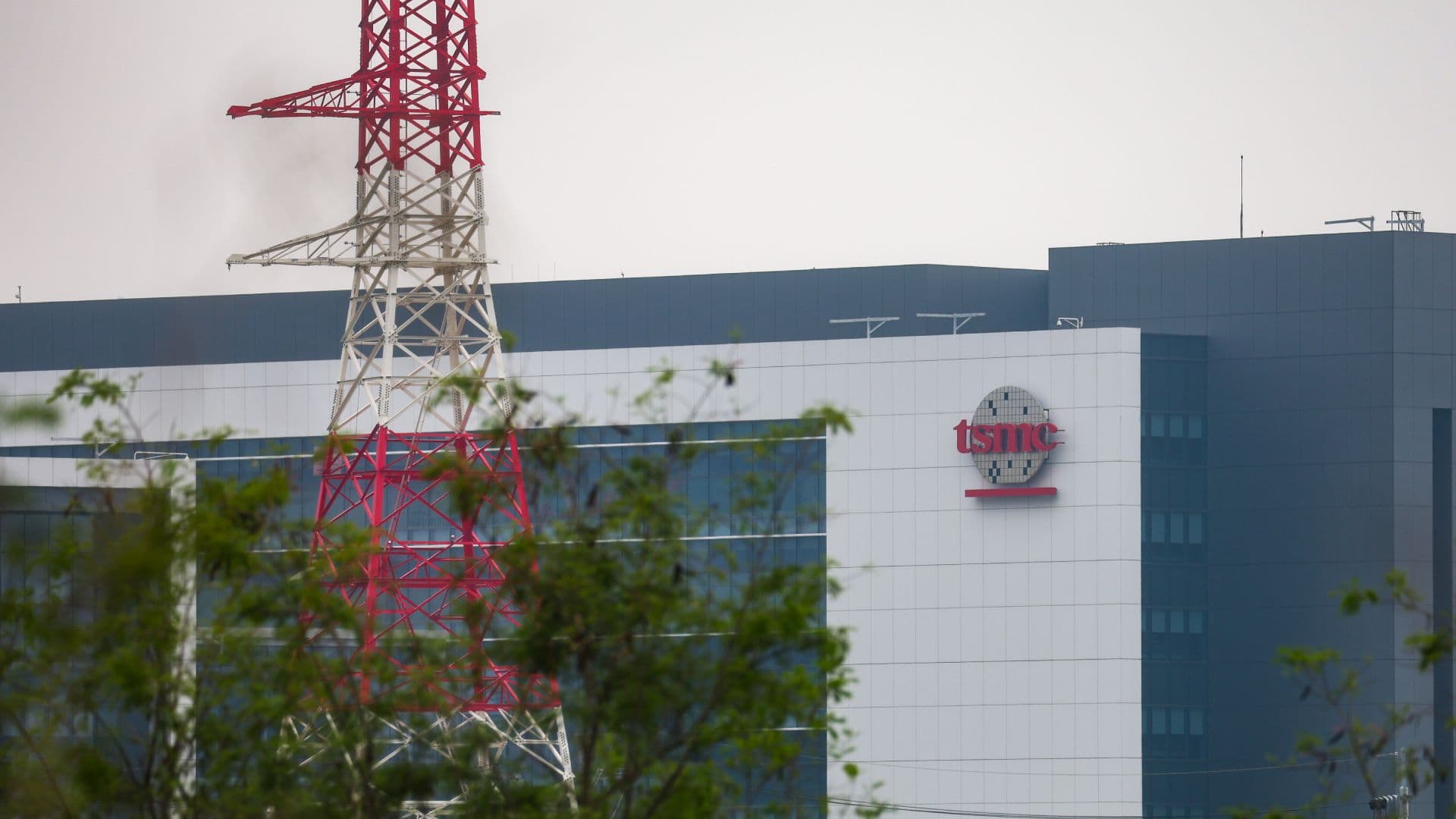
Source: Shane Downing
From other categories

Security
Most Wanted: The Phishing Kits and Techniques Getting Past Security Controls
just now·1 min

Mobile Development
Apple reportedly revamping notifications once again with iOS 28
just now·1 min

AI & Machine Learning
Quoting Jack Despain Zhou
36m ago·1 min

Operating Systems
Security updates for Thursday
2h ago·2 min

Databases
Cornelia Biacsics: Contributions for week 46
4h ago·2 min

Programming Languages
Episode 76 “Java in the Age of AI” [AtA]
16h ago·1 min