Readers with back pain probably recall the much-discussed 1996 chess challenge, wherein the world champion Gerry Kasparov faced off against IBM's Deep Blue chess-optimized computer. The nascent clanker lost the match with a 4-2 total, but still stunned the world by being the first piece of electric sand to win a single game against a grandmaster. Modern chess engines will utterly destroy any human, but Anthropic engineer Nicholas Carlini wondered if granting old hardware new bytes would give the machine a better chance. Spoiler: yes, indeed it would.To understand the task, here's a quick primer on chess scoreboards. A player is rated worldwide with an Elo system (first devised for chess), wherein they lose or gain points in proportion to the difference to their opponent's rating — meaning that winning a match against Magnus Carlsen would net you a lot of points versus defeating me, who only learned about the en passant rule a handful of years ago.At his prime, Kasparov ranked about 2800 points. Given that Deep Blue eventually barely won against him in a subsequent rematch, that is a good starting point for any. Contemporary chess engines like Stockfish have an estimated Elo of about 3,300, far higher than any human — guaranteeing it'll win most matches against a human. Nicholas Carlini got hold of a 1995-era machine, packing a Pentium Pro CPU with all of its 200 MHz of clock speed, and 64 MB of RAM. For his first experiment, he grabbed Crafty, a 1996 chess engine, and measured how well it would do. It came in at 2,000 Elo with 1 second allotted, and 2,400 @ 10s. Running that software on a Ryzen 7 resulted in a 2,600 rating — good, but not enough.Since Crafty's source code is available, he got Claude to mod it with modern features, and eventually reached a ceiling of 3,000 Elo @ 10s per move. That's quite an impressive feat already, especially considering that the lone Pentium Pro represented but a small fraction of the hardware that Deep Blue had. An Elo delta of +200 means this iteration would defeat Kasparov three out of every four games, while a +400 delta means a victory nine out of ten times.Carlini then pulled out the big gun: Stockfish. He had to ask Claude to modify it to use only 32-bit arithmetic instead of 64-bit, and limit its workspace to the measly 64 MB of RAM, minus whatever the system harness took. Right off the bat, the figures were revealing: 2,500 @ 1s, and 3000 @ 10s.The engineer performed a few optimization passes, and eventually got 2,850 @ 1s; 3,100 @ 10s; and almost 3,200 @ 30s — enough to put every human in their place, especially in a grandmaster tournament setting where there's no fixed time per move. You can play the bot using the link on the respective blog post. We'd wish you the best of luck, but there's no such concept in chess.
Anthropic researcher tunes chess software to turn a 200 MHz Pentium Pro into a behemoth that would handily defeat Kasparov and Carlsen
Anthropic researcher tunes chess software to turn a lone Pentium Pro into a behemoth that would handily defeat Kasparov and Carlsen — 1995 challenge would have a different outcome with today's software
Editor
Nov 23, 2026 · 3 min read
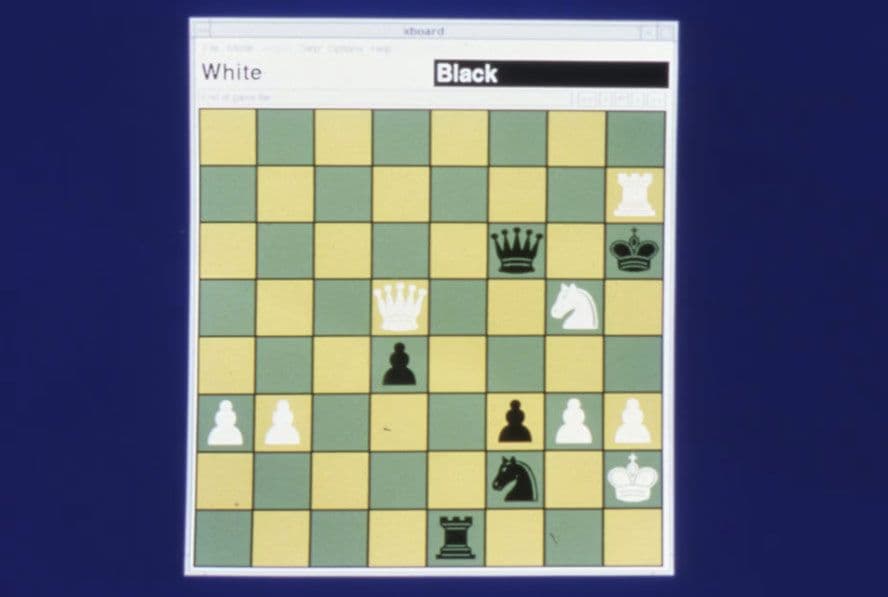
Source: Bruno Ferreira
From other categories
Security
Most Wanted: The Phishing Kits and Techniques Getting Past Security Controls
just now·1 min

Mobile Development
Apple reportedly revamping notifications once again with iOS 28
just now·1 min

AI & Machine Learning
Quoting Jack Despain Zhou
38m ago·1 min

Operating Systems
Security updates for Thursday
2h ago·2 min

Databases
Cornelia Biacsics: Contributions for week 46
4h ago·2 min

Programming Languages
Episode 76 “Java in the Age of AI” [AtA]
16h ago·1 min